
◇ PLUMBING PROBLEM
Water Leaking in Your House?
Shut off the water first. Then call to reach a local plumber.
A water leak in your house can damage floors, walls, and cabinets fast, even when it starts small. The steps below show you how to stop the water and find the source. A local plumber serving Brandon and nearby communities can track down a hidden leak and handle the water leak repair.
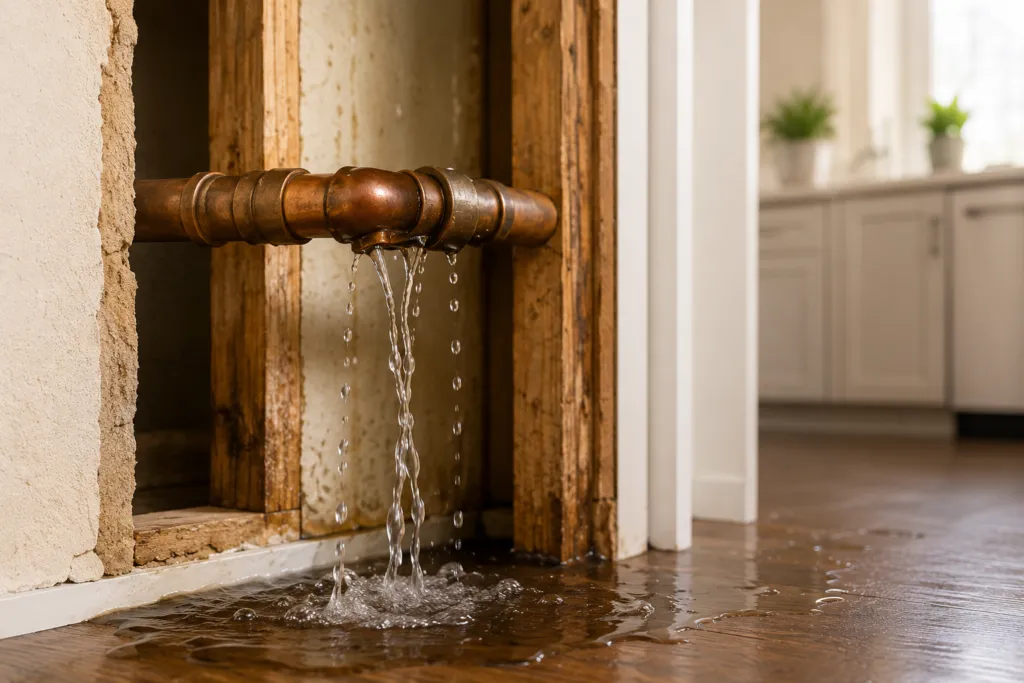
Do This First
Water near outlets or the electrical panel? Don’t touch anything electrical while you’re standing in water. Stay clear and call.
- Stop the water at the closest valve. If the leak is under a sink, behind a toilet, or at an appliance, turn the small valve on its supply line clockwise until it stops.
- If it keeps leaking, shut off the main water valve. It is usually where the water line enters the house: on an outside wall, in the garage, or in a utility area. Turn a round handle clockwise, or turn a lever handle so it sits across the pipe. If a pipe has burst, see our burst pipe guide.
- Turn off power to wet areas. If water is reaching outlets, lights, or appliances, switch off those circuits at the breaker panel, but only if you can reach it without standing in water.
- Catch the water and protect your things. Use buckets and towels. Move furniture, rugs, and electronics out of the way.
- Take photos. Photograph the leak, the wet areas, and any damage. Your insurance company may ask for them.
- Call to reach a local plumber. Have the details below ready.
Where Is the Water Coming From?
- Water coming through the ceilingDripping, stains, or sagging drywall usually means a leaking pipe or fixture above. Keep clear of a sagging ceiling.
- Water leak in a wallDamp drywall, bubbling paint, or a musty smell can point to a leaking pipe behind the wall.
- Leaking pipe under the sinkSupply lines and drain connections under sinks, behind the dishwasher, or at the washing machine. Also check the water heater and the toilet.
- Leak under the floor or slabWarm spots on the floor, the sound of running water, or a higher water bill can mean a hidden leak under the house. See slab leak.
Can’t see the leak? If you can reach it, check your water meter. It’s usually in a box in the ground near the street. Lift the lid carefully. With all water off, note the reading or the small leak indicator, then check again in an hour or two. If it moved, you likely have a hidden leak. See leak detection. If the lid is locked or too heavy, skip this step: the plumber or your water utility can check it. Don’t touch the valve inside the meter box. It belongs to the utility.
Signs of a Hidden Water Leak
- A water bill higher than usual
- The sound of running water when nothing is on
- Stains, mold, or a musty smell on walls or ceilings
- Warm or damp spots on the floor
- Low water pressure
- The water meter moving with everything off
When to Stop and Call a Plumber
- Water keeps leaking after you close the valve
- Water is coming through a ceiling or wall
- Water is near outlets or the electrical panel
- The meter shows a leak you can’t find
- You can’t find or turn the main valve
- You aren’t sure where the water is coming from
What to Tell the Plumber When You Call
Having these answers ready helps the plumber understand your situation from the start.
- Where do you see water: ceiling, wall, floor, under a sink, or outside?
- Is it still leaking after you shut off the valve?
- Did the water meter show a leak?
- About how long has it been leaking?
- Is any water near outlets or appliances?
- Is the leak inside the house or in the yard?
Common Questions
How do I know if I have a water leak in my house?
Watch for a higher water bill, stains on walls or ceilings, damp spots, or the sound of running water when nothing is on. Checking your water meter with everything off is the quickest way to confirm it.
How do I find a hidden water leak?
Start with the water meter check, then look under sinks, behind toilets, around the water heater, and along ceilings and walls. Leaks inside walls or under the slab usually need a plumber with leak detection equipment. See leak detection.
Is a water leak an emergency?
If water is spreading, coming through a ceiling, or reaching electrical outlets, treat it as urgent: shut off the water and call. A slow drip under a sink can usually wait once the valve is closed.
Does homeowners insurance cover water leaks?
It depends on your policy and the cause. Sudden leaks are often treated differently from slow ones. Stop the water and call a plumber first. Knowing what caused the leak helps when you talk to your insurance company, so take photos and keep receipts.
Who is responsible for a leak before the water meter?
The water utility usually handles the meter and the line on its side. The homeowner is usually responsible for the line from the meter to the house. If the leak is on the utility’s side, contact your water utility.
Can I keep using water while I wait?
If you shut off one fixture’s valve, the rest of the house can usually still use water. If you shut off the main valve, the whole house will be without water until the leak is repaired.
How MyHomeFirstCall Works
Call the number at the top of this page. After a short automated prompt for your ZIP code, we’ll help connect you with an independent local plumber serving Tampa, Brandon, Valrico, Riverview, Seffner, Dover, and Thonotosassa. You discuss the problem, scheduling, and pricing directly with the plumber.
This guide is general information, not professional advice. If any step feels unsafe, stop and call.