
◇ PLUMBING PROBLEM
Sewage Backing Up in Your House?
Stop using water first. Then call to reach a local plumber.
Sewage backing up into your house is a health risk, and every flush, shower, or load of laundry can push more wastewater in. The steps below show you how to keep it from getting worse. A local plumber serving Brandon and nearby communities can find the blocked or damaged sewer line and clear it.
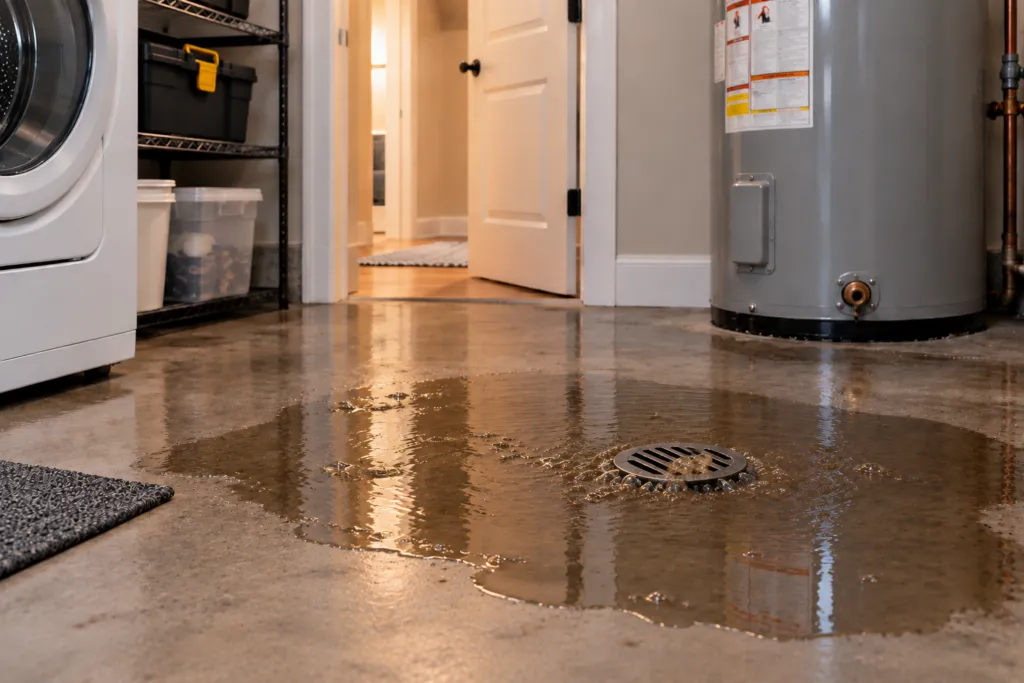
What to Do When Sewage Backs Up
Sewage near outlets or appliances? Don’t touch anything electrical while you’re standing in water or sewage. Stay clear and call.
- Stop using all water. Don’t flush, shower, run the dishwasher, or do laundry. Any water you use can push more sewage back into the house.
- Keep everyone away. Keep children and pets out of the affected area.
- Protect yourself. Don’t touch wastewater with bare hands. Wear gloves and boots if you must go near it, and wash your hands afterward.
- Turn off power to wet areas. If sewage is near outlets or appliances, switch off those circuits at the breaker panel, but only if you can reach it without stepping in water.
- Open windows and take photos. Let fresh air in, and photograph the backup and any damage for your insurance company.
- Call to reach a local plumber. Have the details below ready.
Where Is the Sewage Coming From?
- Floor drain or lowest drainSewage usually shows up first at the lowest drain in the house: a floor drain, tub, or shower.
- Toilet and shower backing upWater rising in the tub or shower when you flush is a classic sign of a sewer line backup.
- Sink or drain backing upSeveral sinks and drains backing up at once points to the main line, not a single clog.
- Cleanout or yardSewage around the outdoor cleanout cap, or a soggy, smelly spot in the yard, can mean a blocked or broken sewer line outside.
Only one toilet backing up and the other drains work fine? See toilet overflowing.
Signs of a Sewer Line Backup
- More than one drain is slow or backing up
- Gurgling from drains or toilets
- A sewage smell inside or outside
- The tub or shower fills when you flush
- Water coming up at the lowest drain
- Wet, smelly spots in the yard
When to Stop and Call a Plumber
- Any sewage inside the house
- Several drains backing up at once
- The backup keeps coming back
- Sewage is near outlets or appliances
- A strong sewage smell won’t go away
- You can’t stop using water at home
What to Tell the Plumber When You Call
Having these answers ready helps the plumber understand your situation from the start.
- Which drains are backing up: toilet, tub, shower, sinks, floor drain?
- How much sewage is on the floor, and in which rooms?
- Did it start after heavy rain?
- Have you stopped using water in the house?
- Is the home on city sewer or septic?
- Has this happened before?
Common Questions
What should I do when sewage backs up into my house?
Stop using all water, keep everyone away from the area, avoid touching the wastewater, and call. Every flush or drain use can make the backup worse.
Is it safe to stay in a house with a sewage backup?
Stay out of the affected area. Sewage can carry bacteria, so if the backup is widespread, or if young children, older adults, or anyone with a weak immune system lives there, consider staying elsewhere until it’s cleaned up.
Why is my sewer line backing up?
Common causes are tree roots, grease, wipes and other items flushed down the toilet, old or sagging pipes, and heavy rain overloading the system. A plumber can find the cause, often with a camera inspection. See main sewer line clog.
Does homeowners insurance cover sewage backup?
Many policies cover sewer backups only with a specific add-on. Stop using water and call a plumber first. Knowing what caused the backup helps when you talk to your insurance company, so take photos before cleanup and keep receipts.
Is the sewer backup my responsibility or the county’s?
Homeowners are usually responsible for the sewer line on their property. Where the utility’s part begins varies, sometimes at the property line or cleanout, sometimes at the main. If neighbors are having backups too, contact your local utility.
How do I clean up after a sewage backup?
Small areas can be cleaned with gloves, boots, and disinfectant. Larger backups, soaked carpet, or drywall usually need professional cleanup. Throw away porous items that sewage has soaked.
How MyHomeFirstCall Works
Call the number at the top of this page. After a short automated prompt for your ZIP code, we’ll help connect you with an independent local plumber serving Tampa, Brandon, Valrico, Riverview, Seffner, Dover, and Thonotosassa. You discuss the problem, scheduling, and pricing directly with the plumber.
This guide is general information, not professional advice. If any step feels unsafe, stop and call.